
Chapter One: Under One Roof
On a busy street in Calgary, just a few blocks from where the Bow River bends, there is an apartment building most people pass without noticing.
Balconies with mismatched chairs. Lights flickering on before the sun has fully set. The steady rhythm of life behind every window.
From the outside, nothing stands out. But behind each door, a different story unfolds.
All under one roof.
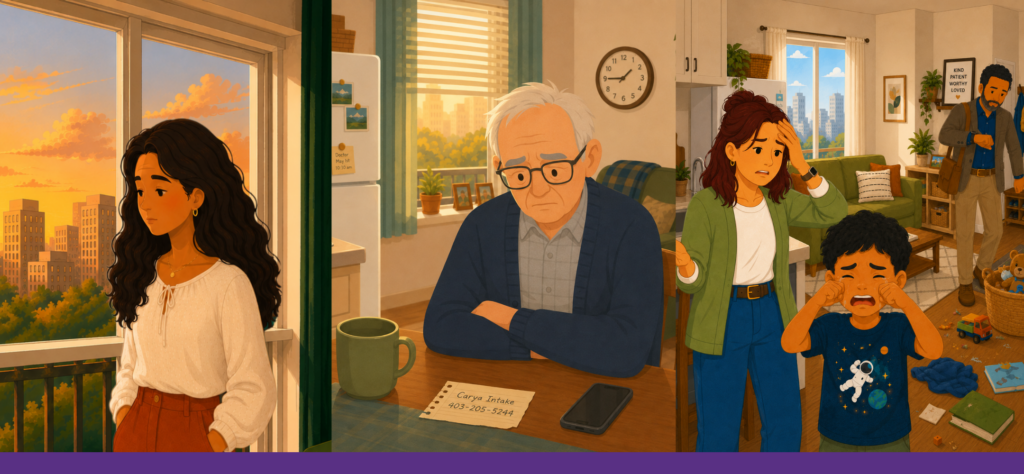
On the fifth floor, Karina stands at her balcony window, her baby finally asleep after a long night.
The dishes are still in the sink. A stack of unopened bills sits on the counter. She hasn’t had a moment to sit down, but she stays there anyway, trying to steady herself.
She picks up one envelope. Turns it over in her hands. Then sets it back down, unopened.
Not today.
Three floors below, and four decades older, George sits at his small kitchen table.
His phone rests in front of him, a number written on a scrap of paper beside it. He picks up his phone but puts it back down.
The silence in the room feels heavier than it should. Through the wall, he can hear a child crying somewhere near him.
Life continuing, just out of reach.
Down the hall, the morning has already come undone.
“Shoes on, please. I said it’s time to go.”
Sarah and Michael’s 10-year-old son is overwhelmed, and on the verge of another meltdown. Sarah feels her chest tighten. Michael checks the time.
They’re already running late – again.
The sound carries faintly into the hallway as the door opens and then closes again quickly.
They pass each other in the hall sometimes. A nod. A glance. A polite smile.
Strangers. Living side by side.
Each carrying more than anyone else can see. Each holding things together in their own way.
Each closer than they realize to a moment where something could change.
Chapter Two: Starting Over
When Karina arrived in Canada, she didn’t come alone.
She came with a partner.
With plans.
With hope.
They worked long hours. Different shifts.
Trying to build something stable.
But it never quite added up.
Everything was unfamiliar. The language. The systems. The way things worked.
Groceries cost more than expected.
Childcare felt out of reach.
And slowly, quietly, things at home began to change.
The pressure built. The tension followed.
Until one day, staying no longer felt safe.
Leaving meant starting over. Again.
But this time, on her own.
By then, the debt had grown to $30,000. She was doing everything she could, and it still wasn’t enough.
Thankfully, the same social worker who supported Karina through leaving also referred her to Carya.
She wasn’t sure what she would find.
Maybe long waitlists.
Maybe another person asking her to repeat herself again and again as she tried to find the words in English.
She almost didn’t go.
Stood outside the building longer than she needed to, wondering if this would be any different.
Then, finally, she walked in.
No barriers.
No judgment.
No expectation that she had everything figured out.
So she came back. And slowly, things began to take shape.
In Carya’s financial wellness program, Karina learned how to understand her debt. How to make it manageable, and how to build a plan that fit her life.
Step by step, things shifted.
She paid down $20,000 in just 12 months.
One afternoon, she opened a letter at her kitchen table, and for the first time, she understood it.
Instead of fear, she had clarity.
But more than that, her confidence grew.
Her language skills strengthened.
She reconnected with family.
She took her child on a small vacation, something that once felt impossible.
For the first time in a long time, Karina could breathe.
And with that came something new.
Possibility.
Not everything was solved.
But she was no longer carrying it alone.

Chapter Three: The Quiet Breaking Point
George’s doctor had already told him what to do.
“Try counselling.”
So he called.
But when the intake worker asked questions, George kept his answers short. Careful. Controlled.
She was nice enough, but he simply wasn’t ready to explain how bad things had become. He was added to a waitlist and encouraged to seek additional services.
But the thought of telling his story again, to someone new, felt like too much. So, he waited.
What no one knew, not yet, was how urgent things were.
George was in his seventies. Living alone. After rent, there was almost no money left.
He was surviving on just $750 a month.
Medication costs were rising, and food became something that he stretched… or skipped.
One evening, he stood in the grocery store, doing the math in his head. Bread or medication.
He put the bread back.
He had lost his job. His partner had passed away. His world had grown smaller.
Quieter.
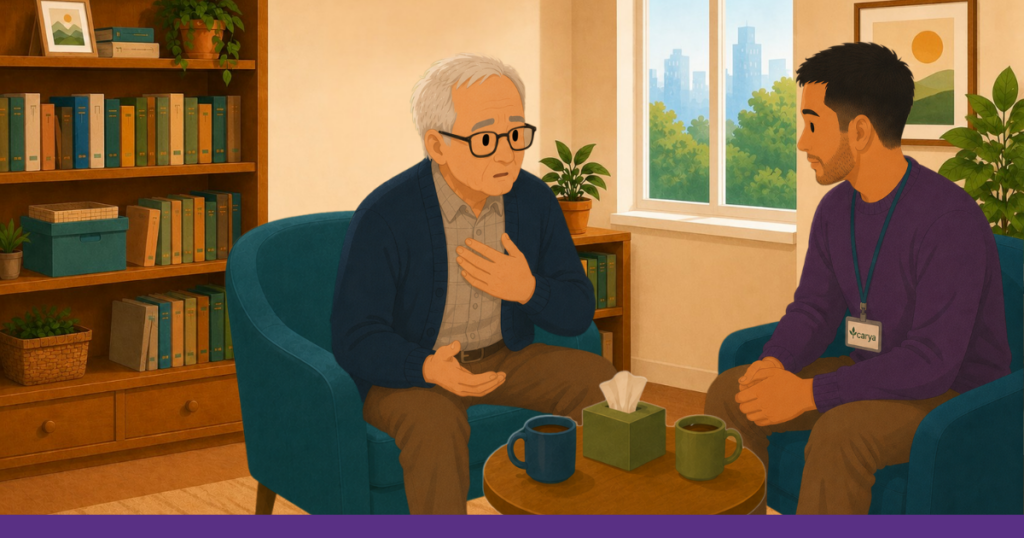
When he finally met with a counsellor in person at Carya, something shifted. There was time, patience, and space to speak at his own pace.
He almost kept it surface-level again, but this time he didn’t. Almost said he was “fine.”
But this time, he didn’t. And this time, he told the truth
About the money. The isolation. The terrible thoughts running through his head.
From there, things moved differently. Not because they were simple, but because he wasn’t alone anymore.
His counsellor connected him directly, to The Way In Network and other programs, explaining his circumstances on George’s behalf, and things began to stabilize.
An outreach worker helped him apply for emergency medication coverage.
Another supported him in accessing financial benefits he didn’t know he qualified for, and together, they applied for rent subsidies.
Advocacy stopped the garnishment that had been cutting into what little money he had been receiving.
And for the first time in months, he didn’t have to choose between food and medication.
He noticed it in small ways. A full grocery bag. A bill paid without panic.
And through it all, he kept showing up.
To counselling. To conversations he had avoided for years.
Nothing changed overnight.
But the direction did.
And for the first time in a long time, he wasn’t bracing himself for things to get worse.
Chapter Four: Learning a Different Way
Shoes half on. A backpack by the door.
“It’s time to go.”
And suddenly, everything unraveled.
Sarah and Michael’s ten-year-old son had recently been diagnosed with ADHD. Alongside it came anxiety that showed up in everyday moments.
Transitions were the hardest.
Getting ready for school.
Turning off a screen.
Moving from one thing to the next.
Small moments became overwhelming.
For him. And for them.
They were trying to stay patient. But stress built quickly. Reactions followed.
And afterward came the quiet guilt.
“Why can’t we handle this better?”
They wanted to show up differently for their son, they really did.
They just didn’t know how.
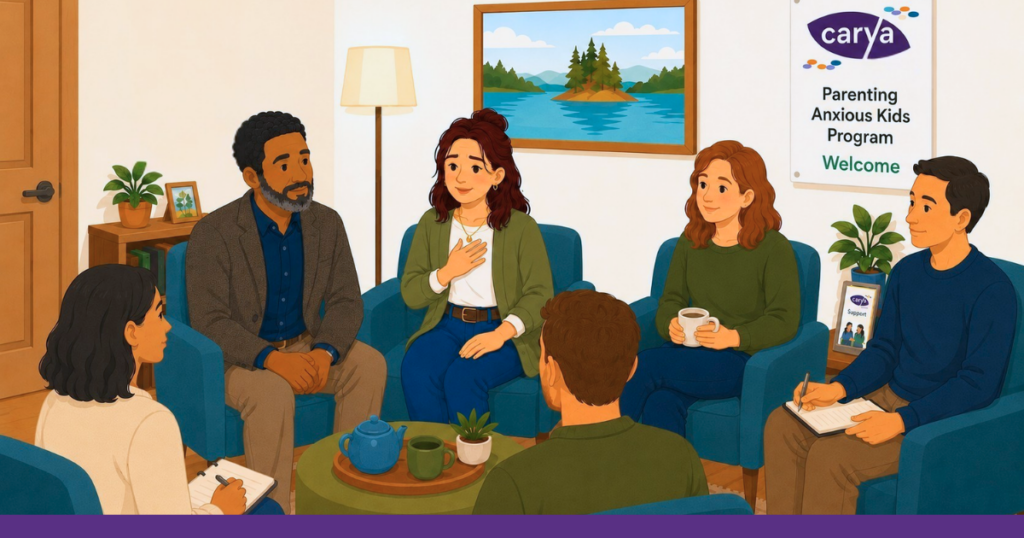
So they came to Carya’s Parenting Anxious Kids program, desperately hoping for a few tools.
They almost didn’t go. It felt vulnerable. Uncomfortable. Like one more thing to try and get through.
But what they found was something more than a few practical strategies.
They found a space where other parents spoke openly about the same struggles.
The same frustration.
The same worry about getting it wrong.
They weren’t alone.
And over time, something shifted.
Sarah began to notice her own anxiety in those moments. And with that awareness came something new…
the ability to pause.
To respond instead of react.
They began to see their son differently. Not as difficult. But as overwhelmed.
And that changed everything.
One morning, things started to escalate. And then… they didn’t.
A pause.
A breath.
A softer response.
The hard moments didn’t disappear. But they became manageable.
And because they went through it together, Sarah and Michael grew stronger as partners, too.
They were still figuring it out. But they weren’t stuck in the same patterns anymore.
Chapter Five: The Moment Between
One morning, the elevator doors open.
Karina steps in first. There’s still a lot ahead, but she knows where she’s going now.
She’s enrolled in school. Working toward becoming a social worker.
Hoping, one day, to be the person who helps someone else take their first step forward.
Three floors below, George steps in, steadying himself as the doors close behind him.
His income had stabilized.
His housing situation was manageable.
His needs were being met.
He has somewhere to be, and enough stability to get there.
Just before the doors close—
“Wait!”
Sarah and Michael rush in with their son.
Shoes on.
Backpack zipped.
They made it.
A small victory, but one that matters.
The elevator hums softly as it begins to descend again.
And for a short moment, they stand together.
Different lives.
Different stories.
But something shared, even if unspoken.
Not the same people who would have stood here months ago.
A glance. A soft smile. A quiet recognition.
Then the doors open.
Karina steps out first, into a future she’s building, one step at a time.
George follows, into a day that no longer feels impossible.
Sarah and Michael step out last, their son between them, moving forward together.
The elevator empties. And they go their separate ways.
Under one roof, different stories unfolded.
From the outside, the building looked the same.
But inside, things were different.
Because change doesn’t always arrive all at once.
Sometimes, it begins quietly.
With a moment of courage.
With support that meets you where you are.
With someone who sees the full picture, and stays.
People who had been holding everything together,
now a little more supported, a little more steady,
a little less alone.
And sometimes, that is enough
to change everything.